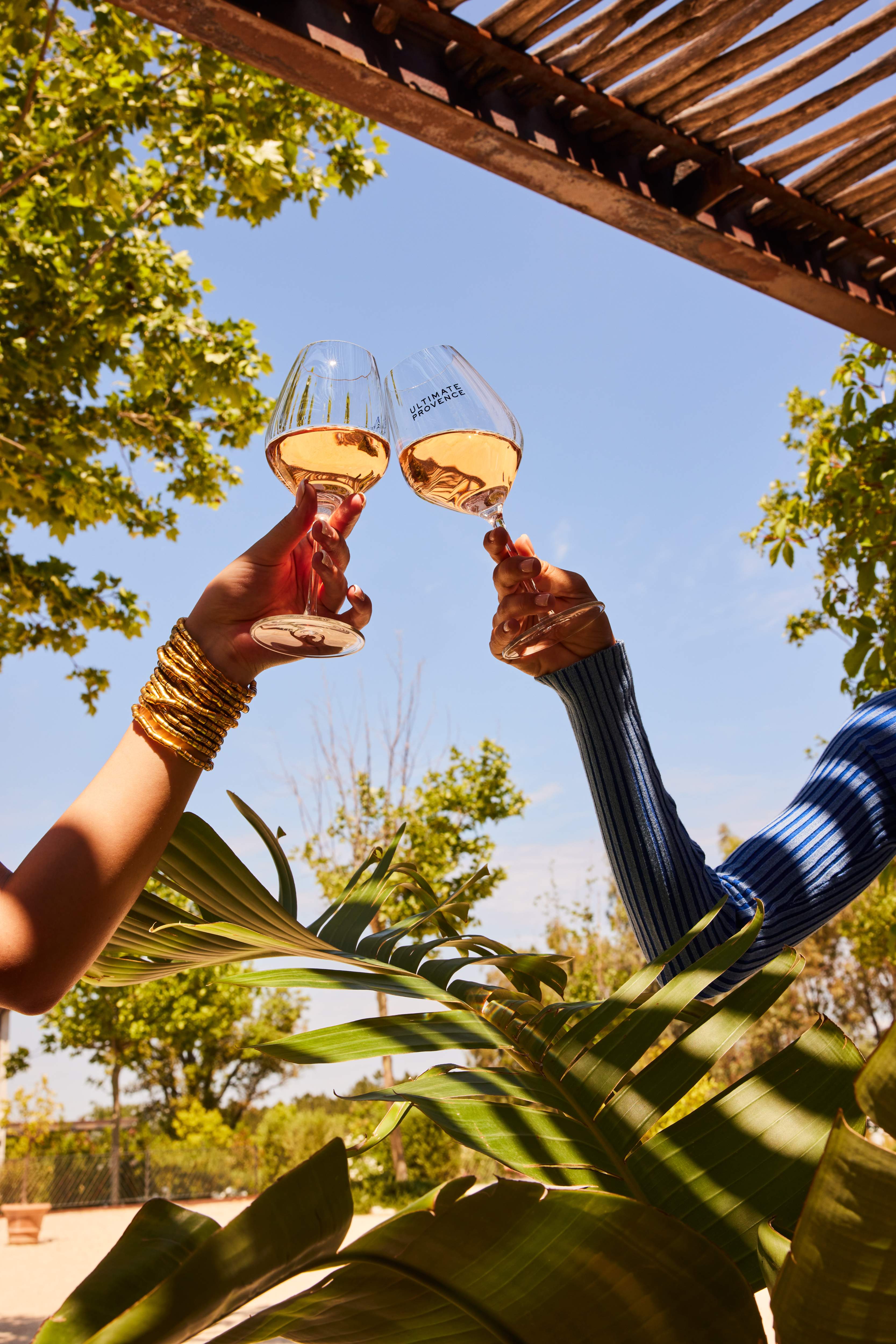
With finesse and subtlety, the Côtes de Provence white wine offers a beautiful pale yellow color with greenish reflections, clear and bright. The olfactory is a summary of Provence, refreshing and invigorating, composed of primary notes of citrus, grapefruit and lemon, pine bark and thyme mingling with small spicy touches. On the palate, it offers a relatively supple attack giving way to a generous and well-structured material. The ideal serving and tasting temperature is 10 °C.
With so many choices when it comes to white wine, it's not always easy to choose, and it's no easier to give as a gift. Tastes and colors vary from person to person, especially when it comes to white wine. To ensure you're sure to please your recipient, here are some interesting characteristics of white wine:
● The different types of white wine:
There are several varieties of white grape varieties such as Chardonnay, used among other things in the production of Champagne,Sauvignon Blanc, grown worldwide and which has aromas of green fruits, herbs, mint and apple or Rolle, Sémillon and Ugni-blanc, very often used in the production of Côtes de Provence white, to name but a few.
Aside from grape varieties, we can also distinguish several types of white wines: sweet or sweet wines, liqueur whites, and fruity dry wines like Alsatian Gewurztraminer. Powerful dry white wines, with a more intense flavor and often aged in oak barrels. Finally, light or semi-dry dry whites, more delicate with a fine citrus aroma.
● The notes of white wine:
Unlike red wine, the juice of white wine does not macerate with the skins and berries of the grapes, which explains why white wines are not tannic, less "rough" and more lively on the palate. White wines known as "for laying down" develop aromas with scents of candied fruit, tobacco, straw or vanilla. The driest ones sometimes bring very beautiful mineral notes, a hint of acidity as well as a fruity and floral aromatic bouquet.
How to taste a white wine?
Tasting a white wine in 4 steps: sight, nose, mouth and synthesis.
Sight: This is observing the appearance of white wine through four criteria: its color, its clarity, its brilliance, and its fluidity. The color shades of white wines vary from straw yellow, green gold, pale, yellow, golden or old gold, light or dark amber. Clarity and brilliance are easier to define.
The nose of a white wine is divided into three main types of aromas: fruity or floral for the first, buttery and/or brioche for the second and the third which potentially reflect the aging of a white wine: honey or even dried fruits...
The palate: the attack, mid-palate and finish give you indications of the liveliness, namely a frank or supple attack, as well as its character, opulent and ample or not in the mouth and the presence of residual sugars in the white wine.
Summary: the balance of white wines is mainly analyzed in terms of acidity/alcohol/sweetness ratio.
What is the difference between organic and non-organic white wine?
Conventional white wine
- The cultivation and winemaking process does not follow the principles of organic or biodynamic farming. Synthetic chemicals and oenological inputs are permitted.
- Products permitted for conventional wine: all chemicals such as insecticides, herbicides or other plant growth regulators, etc.
- Quantity of sulfites authorized for conventional white wine: up to 200 mg/l total SO2.
Organic white wine
- An organic wine is produced using agriculture and vinification methods free of synthetic chemicals. The leading AB and Bio Europe labels guarantee this approach.
- Products authorized for growing organic wine: chemicals of natural origin, but certain synthetic products are an exception: slaked lime, paraffin oil and copper compounds such as copper hydroxide, copper oxychloride, cuprous oxide, Bordeaux mixture and tribasic copper sulfate.
- An organic white wine can contain up to 150 mg/l SO2 total sulfites.
What grape varieties are used for Côtes de Provence white wine?
Rolle: white grape variety of Turkish origin found in particular in the Var, inCorsicaunder the name Vermentinu, and in Italy. Its medium-sized bunches and berries turn from white to pink when ripe. It thrives in warm climates with dry, poor soils. Rolle produces rich, well-balanced white wines that may lack acidity, but remain very aromatic.
Sémillon: a grape variety originally from Bordeaux, in Provence, it allows the production of great dry white wines with low acidity and with a lot of roundness and very beautiful aromas of white flowers.
Ugni-blanc: originally from Italy, in Tuscany, where it takes the name Trebbiano Bianco, it appeared in France from the Middle Ages under the name Ugni-blanc. A high-yielding variety, it ripens late. It is interesting for its acidity used in blends to bring freshness.
How are the grapes for a white Côtes de Provence grown?
Destemming and crushing: by carrying out these steps, the grapes can then be pressed directly to release the must and separate it from the skin. Sometimes, cold skin maceration can be carried out to extract a maximum of primary aromas contained in the skins in the vat.
Pressing: Most of the time, the harvest is immediately placed in a press where the grapes are crushed to release the juice.
Settling: The juice is then put into a vat, but still contains a lot of solid matter that must be removed. Settling clarifies the juice and prevents off-flavors from developing during fermentation.
Alcoholic fermentation: This is when the sugars in the must are transformed into alcohol through the action of yeast. It lasts approximately 10 days at a temperature of around 20°C.
Aging: The purpose of this process is to clarify and stabilize the wine, eliminate its defects, and allow it to develop. It can be done in stainless steel vats or barrels, depending on the type of wine desired.
Decanting: This separates the wine from its coarse lees. The final step is to bottle the wine.
What sulfites are used?
Most often, sulfur sulfites, otherwise known as sulfur dioxide (SO2), sodium sulfite, sodium bisulfite or sulfiting agents.
What food and white wine pairings do you recommend?
With our AOP Côtes de Provence white wines such as ourGrande Cuvée white 2017, a foie gras terrine, a turbot or a Bresse chicken with chanterelles.
With aBerne Inspiration White 2021, grilled sea bass with fennel vierge sauce, seafood or even a brandade from Nîmes. With aTerre de Berne white 2022, a scallop cappuccino, sea bream in a salt crust, cod with vierge sauce. At Château Saint-Roux, theWhite Dovecote 2022is an ideal wine as an aperitif, but also to accompany grilled fish. An UPUltimate Provence white 2021as an aperitif too, but also with sea urchins or oysters...
When should you drink a white Côtes de Provence?
Côté de Provence white pairs perfectly with appetizers, starters, main courses, cheeses, and desserts. A sample menu: as an aperitif with sea urchin stew, as a starter with langoustine ravioli, as a main course with grilled sea bass, with cheeses like Rocamadour, and as a dessert with a walnut cake.
Are your white wines environmentally friendly?
Our organic winery is certified organic. This approach is part of our commitment to protecting a bountiful nature, just like the people who cultivate it. It's a way for us to achieve a better and more faithful expression of our terroirs, and, beyond that, it's a commitment to our environment and the people who value it every day.
How long can you keep white wine from Provence?
Each wine evolves differently and, initially, everything depends on the care taken by the winemaker in the vineyards, in the cellar, but above all on the terroir, the vintage, the region, the appellation and then, the storage conditions of the bottle of wine. Their aging potential ranges from two to ten years, sometimes more. After opening, on average, a white wine from Provence can be kept for three days in a cool place; beyond that, it risks oxidizing upon contact with air.
What are the best vintages of Côté de Provence white?
The first thing to know is that in oenology, a vintage refers to the year in which the grapes were harvested and a wine was produced. It's a key benchmark for assessing the quality of a wine. In recent years, the best vintages for white Côte de Provence have been 2015, 2017, and 2020. 2019 is also worth noting.


 Esprit Méditerranée Vin Blanc 2025 IGP Méditerranée

 Grande Récolte White Wine 2023 AOP Côtes de Provence
 Intemporelle White AOP Côtes de Provence
 Château de Berne White 2024 AOP Côtes de Provence


 Château de Berne Grande Cuvée White 2021 AOP Côtes de Provence
 Ultimate Provence White 2024 AOP Côtes de Provence
 Le Pigeonnier White Wine 2024 AOP Côtes de Provence
 La Réserve des Bertrands White Wine 2024 AOP Côtes de Provence
 Ultimate Provence White Gift Set AOP Côtes de Provence